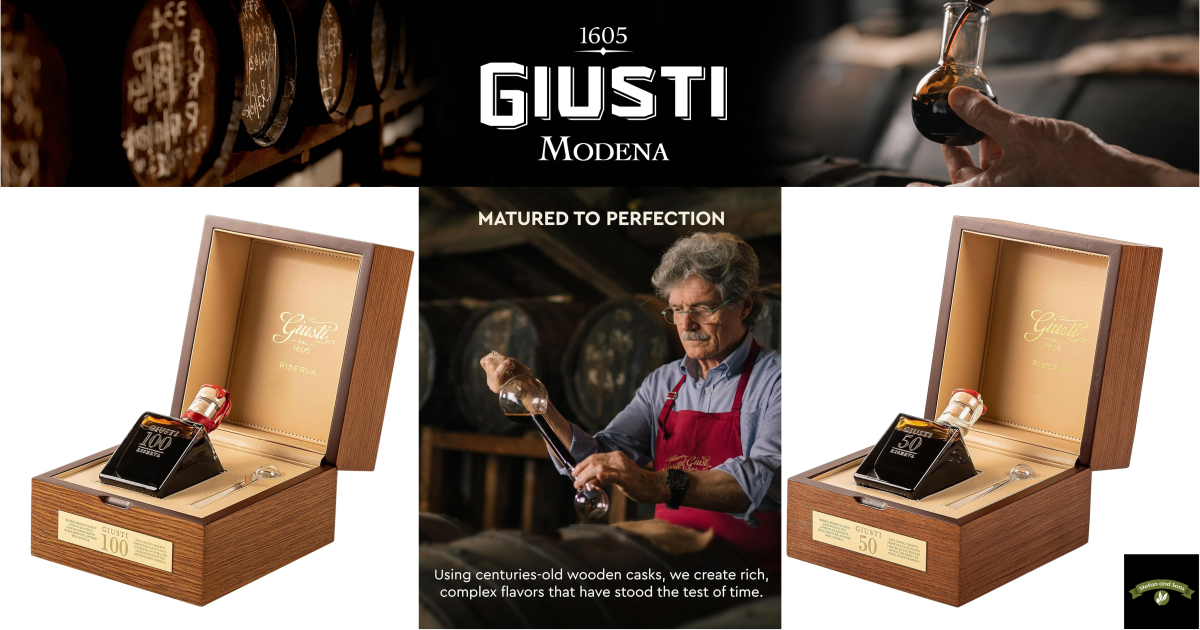
A 100-year-aged vinegar is not meant to be poured.
It is meant to be understood.
Unlike everyday vinegars used for cooking, ultra-aged vinegars belong to a different category entirely—closer to a fine spirit or a rare perfume than a condiment.
Their value lies not in volume, but in concentration, time, and restraint.
Why Aging Vinegar Takes Decades
Traditional aging of vinegar is a slow, generational process that cannot be accelerated or industrialized.
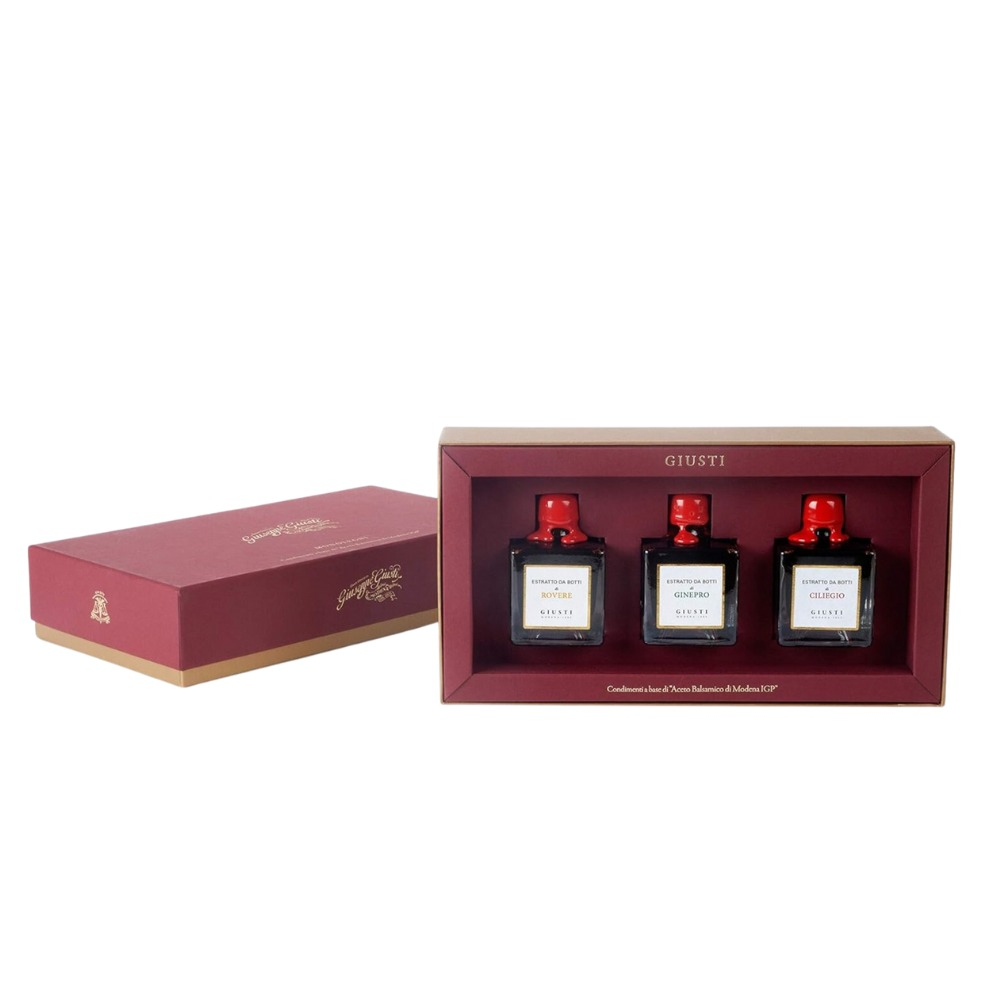
Fresh cooked grape must is placed into a succession of wooden barrels—often oak, chestnut, juniper, or cherry—where it ages naturally for decades. Over time:
-
Water slowly evaporates
-
Flavors concentrate year after year
-
Texture becomes syrup-like
-
Acidity softens and integrates
-
Final volume is dramatically reduced
What begins as hundreds of liters may result in only a few bottles after decades of aging.
This process is not designed for efficiency.
It is designed for patience.
50 vs 100 Years of Aging: What Actually Changes?
At this level, aging is not incremental—it is transformational.
A vinegar aged for fifty years already shows extraordinary density and depth. Its texture is velvety, coating the palate with layered sweetness and acidity that have fully integrated over decades of slow evaporation.
It is intense, yet balanced, and designed to be used sparingly—usually in drops—to finish a dish rather than season it.
A hundred-year-aged vinegar exists on an entirely different plane. After a full century of aging, the texture becomes almost resinous, with a concentration that borders on the ethereal.
The acidity softens to the point of becoming a whisper, allowing complex aromatic notes to dominate. At this stage, even a single drop is sufficient to transform a dish.
The difference is not simply age.
Each additional decade represents further loss of volume, greater risk, and deeper stewardship. What remains after one hundred years is not just vinegar, but a rare expression of time itself—produced in quantities so limited that replacement is impossible.
Why Top Chefs Use Aged Vinegar in Drops
Ultra-aged vinegars are never used as ingredients.
They are used as finishing expressions.
One or two drops can:
-
Elevate a simple dish
-
Balance richness
-
Introduce sweetness without sugar
-
Add aromatic depth
In Michelin-starred kitchens, these vinegars are treated with the same respect as aged cognac or rare spirits—applied sparingly and always at the final moment.
A single 100 ml bottle can last for years.
Why These Bottles Cost Hundreds (or Thousands)
The price of ultra-aged vinegar is not branding—it is time.
Each bottle reflects:
-
Decades of barrel aging
-
Continuous evaporation and loss
-
Generational oversight
-
Extremely low final yield
-
Absolute impossibility of scaling production
Once a 100-year vinegar is bottled, it can never be replaced.
The Giusti Legacy
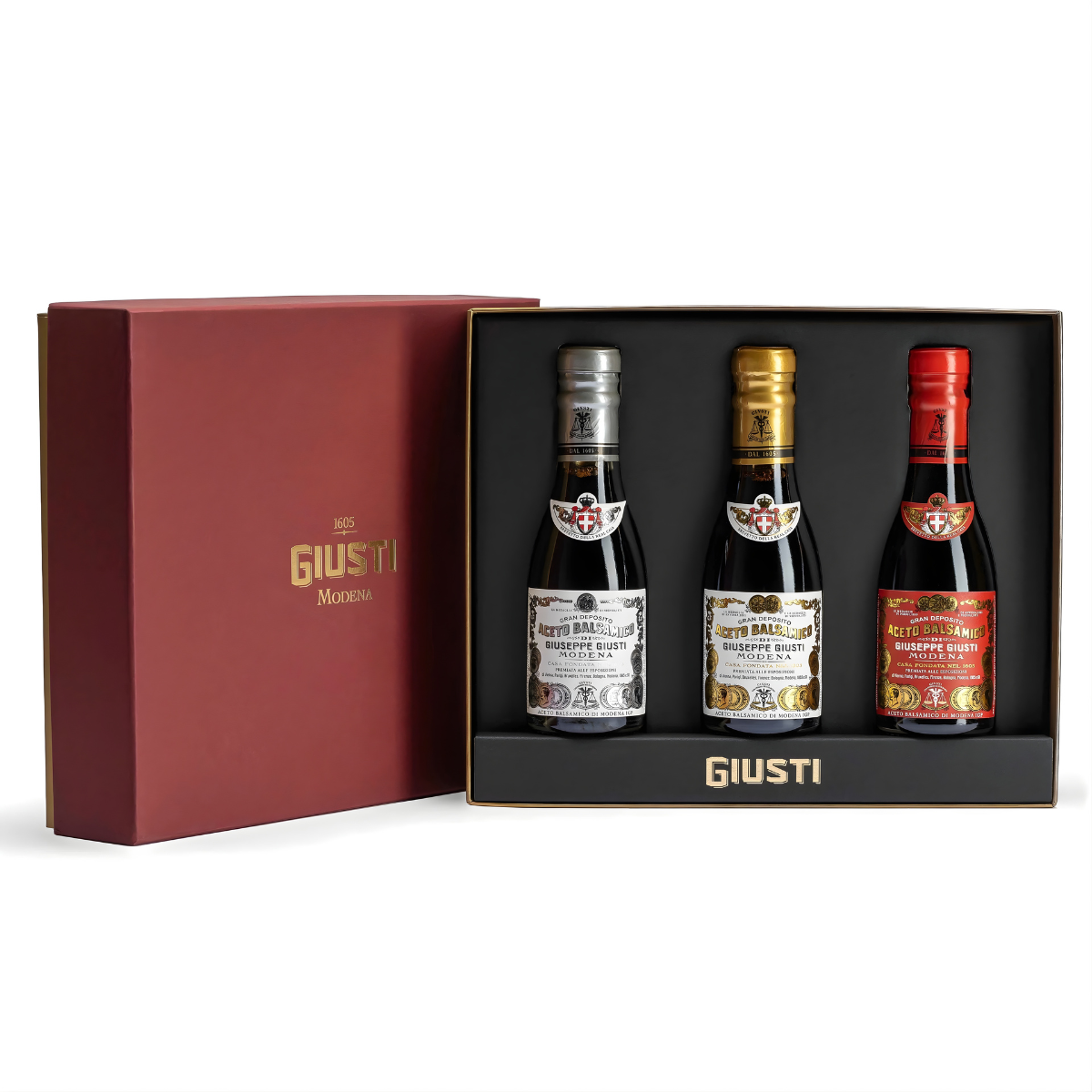
Giuseppe Giusti is the oldest balsamic vinegar producer in the world, with documented origins dating back to the 17th century.
Their luxury reserves are the result of uninterrupted aging traditions passed down through generations.
These vinegars are not created for trends or mass markets—they exist because the barrels were never rushed.
This is heritage, not hype.
Availability in the United States
Vinegars aged 50 to 100 years are exceptionally difficult to source in the United States.
Most are allocated internationally and available only through long waiting periods. Immediate delivery is rare.
At Stefan & Sons, a very limited number of these reserves are available for immediate US delivery, with:
-
Fully insured shipping
-
Signature-required delivery
-
Proper handling and documentation
Availability is naturally limited and subject to change.
A Category of Its Own
Ultra-aged vinegar is not for everyday use.
It is for collectors, chefs, and connoisseurs who value rarity, precision, and time.
For those seeking one of the rarest expressions of aged vinegar available today, the Giuseppe Giusti Luxury Reserve – 50 and 100 Years represents a category entirely its own.