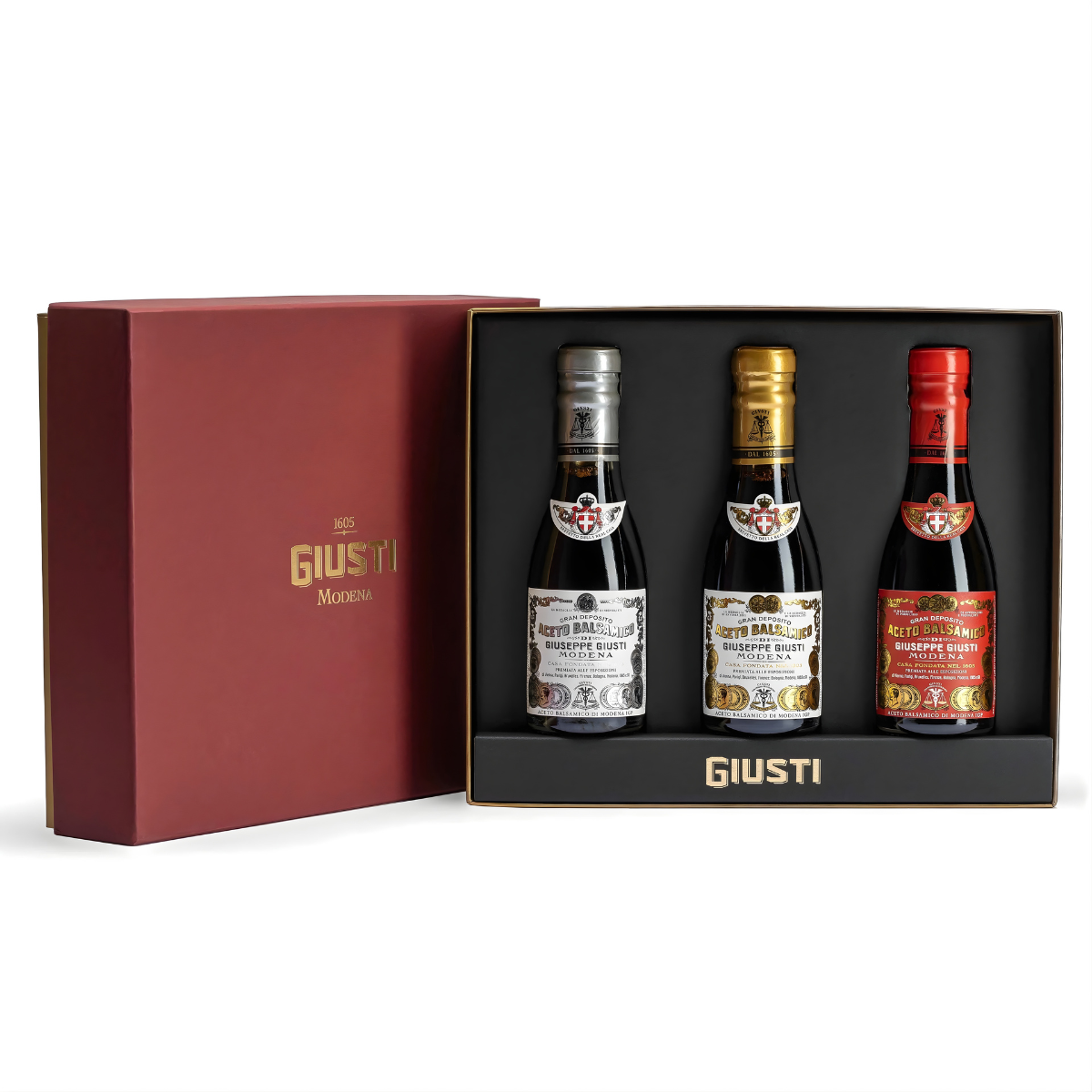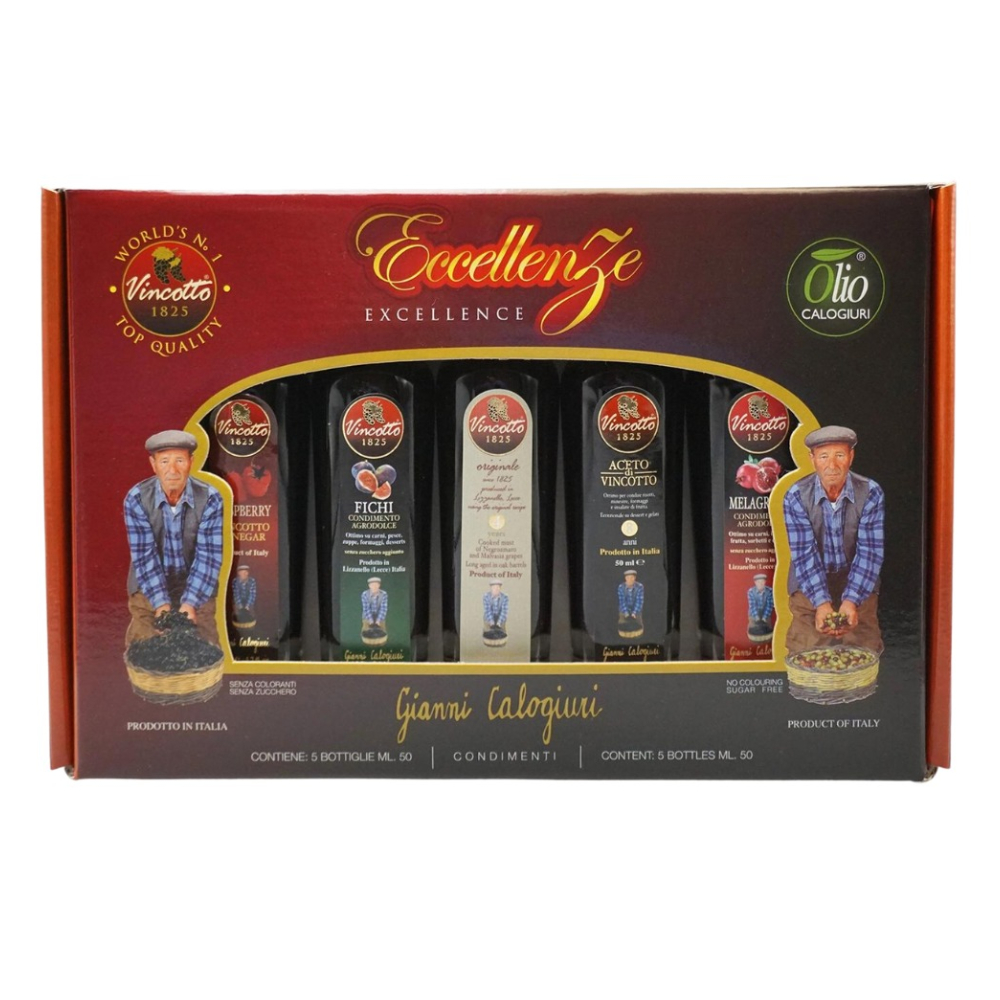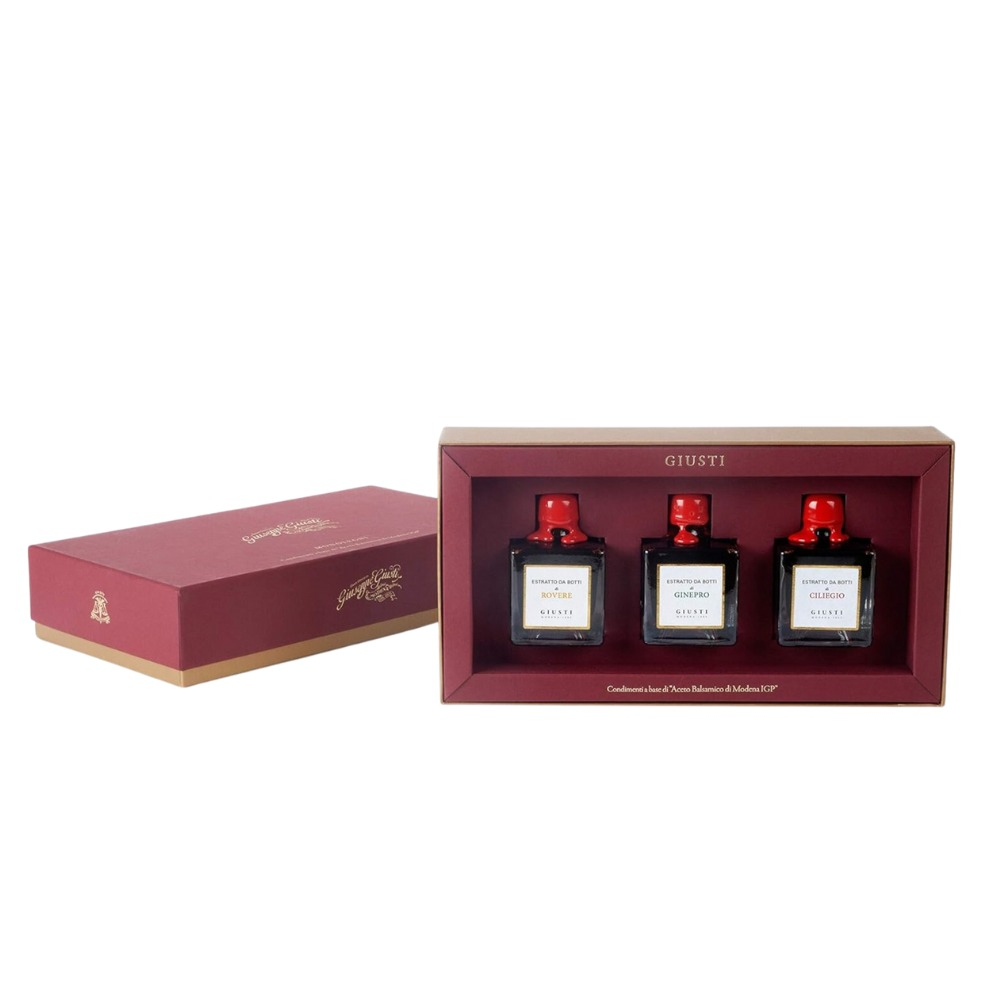

Balsamic vinegar is one of the most misunderstood products in the pantry. Two bottles can carry the word balsamic and yet be made in completely different ways, with different ingredients, aging methods, and intended uses. Understanding these differences helps you choose the right bottle and avoid paying for a name instead of true quality.
Quick answer
Traditional Balsamic Vinegar (DOP) is made exclusively from cooked grape must and aged for many years in wooden barrels, developing natural sweetness, density, and complexity. Grocery store balsamic vinegar is typically a faster-made blend that includes wine vinegar and grape must, sometimes with added coloring, designed for everyday cooking and dressings.
Ingredients: one ingredient vs blended formulas
Traditional Balsamic Vinegar
Authentic traditional balsamic vinegar is made from a single ingredient:
- Cooked grape must
No wine vinegar, no added sugar, no thickeners, and no caramel coloring. All flavor, sweetness, and texture come naturally from the grapes and the aging process.
Grocery store balsamic vinegar
Most supermarket balsamic vinegars are made from a blend of ingredients, commonly including:
- Wine vinegar
- Cooked or concentrated grape must
- Optional caramel coloring (E150d)
These additions help standardize flavor, color, and cost across large-scale production.
Production and aging: time versus speed
Traditional Balsamic Vinegar follows a slow, artisanal process. After the grape must is cooked, it ferments naturally and is aged in a series of wooden barrels made from different woods. Each year, a small amount evaporates, concentrating the vinegar. This process takes a minimum of 12 years and often much longer.
Grocery store balsamic vinegar is produced for efficiency. Aging, if present, is short. Flavor balance is achieved through blending and formulation rather than decades of barrel aging, allowing for consistent results at a lower price.
Texture and flavor: natural concentration vs sharper acidity
Traditional balsamic vinegar develops a naturally thick and glossy texture as water slowly evaporates during aging. The flavor profile is layered and balanced, with gentle acidity, grape sweetness, and a long, evolving finish.
Grocery store balsamic vinegar is usually thinner and more acidic. Its flavor is straightforward and sharp, making it effective for mixing and cooking, but less expressive when tasted on its own.
Certification and origin
True Traditional Balsamic Vinegar is protected by DOP certification and produced only under strict regulations. It is typically sold in a small 100 ml bottle and carries official seals that guarantee authenticity and production standards.
Many grocery store balsamic vinegars are classified as IGP or have no certification at all. While IGP balsamic can still be well made, it follows different rules and allows the use of wine vinegar.
How each type should be used
How to use Traditional Balsamic Vinegar
Traditional balsamic vinegar should be treated as a finishing ingredient. It is best used:
- Drizzled over aged cheeses
- Finished on grilled steak or roasted vegetables
- Paired with strawberries, figs, or pears
- Added to dishes right before serving
Avoid long cooking times, as heat can reduce the aromatic complexity developed through aging.
How to use grocery store balsamic vinegar
Grocery store balsamic vinegar is ideal for everyday applications, including:
- Salad dressings and vinaigrettes
- Marinades
- Reductions and pan sauces
- General cooking
Why the price difference is so large
The price of Traditional Balsamic Vinegar reflects the time, evaporation, and craftsmanship involved in its production. Years of aging reduce yield and require careful barrel management. Grocery store balsamic vinegar is produced at scale, with shorter timelines and higher output, resulting in a much lower cost.
Which one should you choose?
Choose grocery store balsamic vinegar if you need a reliable, versatile vinegar for daily cooking. Choose Traditional Balsamic Vinegar if you want a refined finishing ingredient that adds depth and elegance to simple dishes. They are not interchangeable, but they each serve a clear purpose.